The River Arts District: Past, Present, and What Comes Next
From industrial corridor to creative hub—and a district actively shaping its next chapter
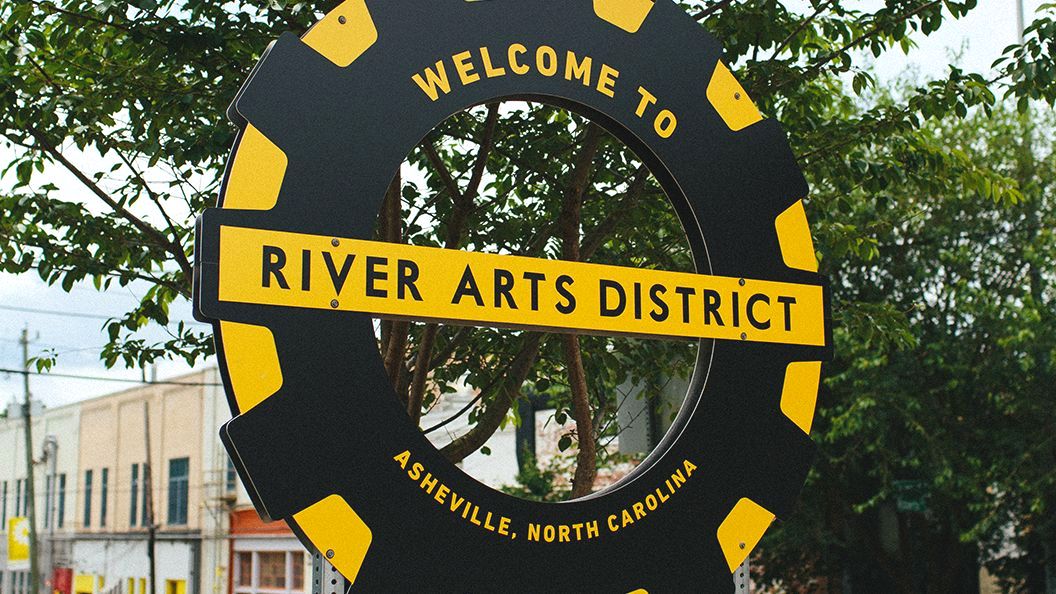
The River Arts District is one of Asheville’s most dynamic places to explore—a working creative community where you can walk through studios, meet artists, experience public art, and see how the district continues to evolve in real time.
As you move through the district today, you’ll encounter a mix of longtime studio buildings, newly reopened spaces, active construction and redevelopment projects, and new gathering places emerging along the river. From Wedge Studios and Curve to Riverview Station, the Foundy area, and the greenway, each part of the district reflects a different piece of its story.
This is not a finished place—it’s a district in motion.To understand what you’re seeing now—and where it’s going next—it helps to understand how the River Arts District came to be.
A Landscape Shaped by the River, Labor, and Industry
The River Arts District is one of Asheville’s most distinctive and evolving neighborhoods—a place shaped as much by geography and industry as by the artists who transformed it. What exists today was never planned—it formed out of the conditions left behind by industry.
Long before it became an arts district—or an industrial corridor—this land is part of the traditional homelands of the Cherokee people. The French Broad River has long served as a route for movement, trade, and connection. For generations, the river system—including the confluence of the French Broad and Swannanoa Rivers—shaped patterns of travel, seasonal use, and settlement.
With the arrival of the railroad in the late 1800s, that same geography was transformed into one of Asheville’s earliest industrial zones. Mills, tanneries, warehouses, and freight facilities lined the riverfront, with buildings oriented toward production, movement, and access.
Much of that development relied on the labor of African Americans, including formerly enslaved individuals and incarcerated workers. The river corridor became a place where industry, opportunity, and inequity intersected—a history reflected today through the Black Cultural Heritage Trail.
Over time, as manufacturing declined and transportation systems shifted, these buildings were left underused—large industrial structures in a floodplain, ready for a different kind of use.
The Artist-Led Transformation
The River Arts District didn’t emerge on its own—it was built through a series of individual decisions that gradually formed a connected system.
Beginning in the 1980s, artists moved into vacant industrial buildings, converting them into working studios. What began as a practical reuse of space evolved into one of the most active creative communities in the region.
That growth was shaped by artists, organizers, and building owners who helped define the district building by building. Helaine Green and Trudy Gould transformed a former tannery into what became Riverview Station. Pattiy Torno converted the former Standard Oil buildings into what is now Curve Studios. John Payne’s work at the Wedge continued the tradition of maintaining accessible studio space.
Brian and Gail McCarthy helped build the broader ecosystem—expanding Highwater Clays, developing the Clingman Avenue Extension warehouse complex, and playing a pivotal role in launching Studio Stroll and bringing artists from across the country into the district.
By the 1990s, Studio Stroll opened the district to the public, and by 2005 it was formally recognized as the River Arts District.
Growth, Visibility, and a Turning Point
By the late 2010s and early 2020s, the River Arts District had become one of the most active areas in Asheville. With increased tourism and improved access through the greenway, it evolved into a place where visitors could move through studios, businesses, and gathering spaces throughout the district.
Corridors like Depot Street and Lyman Street became key connectors, linking the district’s industrial past with its creative present. The energy of the district expanded beyond individual studios into a shared, place-based experience centered on art, food, and community—at one point even being described as a “new downtown” for Asheville.
Depot Street and the surrounding corridor reflect the district’s historic connection to rail and transportation. Today, that connection is part of an active, ongoing effort to bring passenger rail back to Asheville through the Western North Carolina Passenger Rail Corridor. The project is currently in the planning phase, with additional study work planned through 2027. Potential station locations are being explored, including sites in Biltmore Village and within or near the River Arts District. A station in this area would reconnect the district to its historic role as a transportation hub while creating a new point of access to the district for residents and visitors.
In 2024, Hurricane Helene brought significant flooding to the district, impacting a significant portion of studios and businesses. It marked a major disruption, but also a defining moment for the community.
What followed has been a period of rebuilding, adaptation, and renewed momentum, with artists, businesses, and organizations working together to bring activity back across the district.
Recognition and Continued Momentum
In 2026, the River Arts District was named one of the top arts districts in the country by USA Today—a recognition that reflects both its long history and its continued evolution.
That recognition speaks to the work of the organizations and community members who continue to support the district, including River Arts District Artists, Unified River Arts District (U-RAD), and River Arts District Business Association (RAD Biz), whose coordination and advocacy remain central to the district’s ongoing activity.
Projects and Activity Across the District
These projects reflect the range of activity shaping the district today—from artist-led spaces and production studios to redevelopment efforts and new public-facing uses.
RAD Rendezvous has emerged as a central hub, offering studio space for artists and creating a flexible, public-facing environment that reflects the district’s adaptive nature.
At Wedge Studios, Summit Coffee has reopened in a new shared space with Joyful Noise Hi-Fi, combining café, music, and gathering space in a way that reflects the district’s evolving mix of creative and social activity.
At Cotton Mill Studios, one of the district’s largest and oldest studio buildings, artists have returned following more than a year of remediation and rebuilding after significant storm damage, restoring activity to a key anchor in the River Arts District.
At Curve Studios, the property’s acquisition by Burial Beer Co. signals a new phase of mixed-use redevelopment that integrates riverfront access, public space, and creative use within one of the district’s historic industrial sites.
At 304 Lyman Street, the former Asheville Waste Paper Company building—intended as the new home for Salvage Station—has recently been impacted by a fire, adding another layer of complexity to the project. Even so, plans are moving forward, with a continued commitment to rebuilding and bringing live music and activity back into the district.
Riverview Station, long one of the district’s anchor studio buildings, is now entering a new phase under the ownership of GBX Group, with redevelopment moving forward through a preservation-focused approach that builds on the structure’s historic significance.
In the Foundy area, the Marquee has reopened and is helping restore one of the district’s most active public-facing spaces. Before the storm, the Marquee housed hundreds of artists, makers, vintage collectors, and creative vendors in a 50,000-square-foot former industrial building. Its reopening brings back an important visitor anchor for the district, alongside the continued work of Foundation Woodworks and other production-based creative businesses in the area.
Molten Made, a fine art foundry specializing in metal casting, is rebuilding its presence in the River Arts District after losing its original studio in 2024. The team is developing a new studio space while remaining active through community events and partnerships.
Ceramics, Production, and Continuity
Ceramics has long been a defining part of the River Arts District, supported by both artists and production infrastructure.
Highwater Clays, located along Riverside Drive, was a major regional clay manufacturer serving artists across the Southeast and nationally. Following significant storm impacts to both its Asheville and Florida operations, the company ceased operations, marking the loss of a key piece of the ceramics production network.
Village Potters, formerly located in Riverview Station, has since reopened in a new location, continuing its work through ceramics through studio space, education, and limited clay distribution. Their reopening represents both continuity and adaptation within the district’s creative ecosystem.
The River, the Greenway, and Future Planning
The French Broad River remains central to the identity and future of the River Arts District. Often described as one of the oldest rivers in North America, it has shaped how this area has been used for generations.
Today, the greenway system, part of the Wilma Dykeman RiverWay, has transformed access to the river, creating new connections between neighborhoods, public space, and the arts district.
Looking ahead, larger planning efforts are underway across the riverfront. Projects focused on parks, open space, and ecological restoration are being developed alongside the RAD Resilience Plan, which is helping shape how the district can continue to function as a creative community within a floodplain.
The proposed Creative Campus is another key part of that future, representing a more coordinated approach to supporting artists through shared infrastructure and long-term space.
A District in Motion
The River Arts District continues to evolve in real time.
It is a place where layered histories remain visible—where the legacy of industrial labor and Black history exists alongside a thriving creative community, and where new projects continue to shape what comes next.
What defines the district is not just what it has been, but its ability to continue adapting—building on its past while actively creating its future.
First Fridays & Second Saturdays: Explore Buncombe County’s Art Walks
First Fridays & Second Saturdays: Explore Buncombe County’s Art Walks Discover the artists, galleries, studios, and creative businesses shaping...
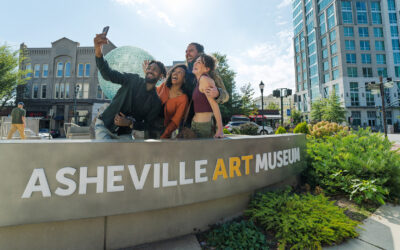
All Arts. All Ways. A Summer of Festivals, Markets & Events Across Buncombe County
All Arts. All Ways. A Summer of Festivals, Markets & Events Across Buncombe CountyThe long days are here, and Buncombe County's arts calendar is...
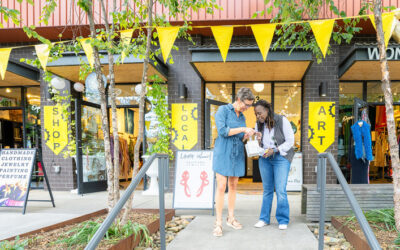
All Arts. All Ways. WEST: RAD, Leicester, and Candler
All Arts. All Ways. in West Asheville, RAD, Leicester, and Candler Explore Hidden Gems Across Asheville's Creative West SideWest Asheville, the...