
Proposed City Budget Cuts Put Asheville’s Arts and Economic Recovery at Risk
As the City of Asheville continues to navigate a significant budget deficit, a series of proposed cuts and funding pauses introduced during the March 24 budget work session are raising concerns across the local arts and business community. The proposals—targeting the Event Support Grant, holiday programming, and public art—are framed as cost-saving measures, but many stakeholders argue they could ultimately reduce economic activity and slow the city’s recovery following Hurricane Helene.
The next key milestone in the budget process is the April 14 public work session, followed by the release of a draft budget and public hearing in May ahead of a final vote scheduled for June 9.
Event Support Grant: Small Investment, Large Impact
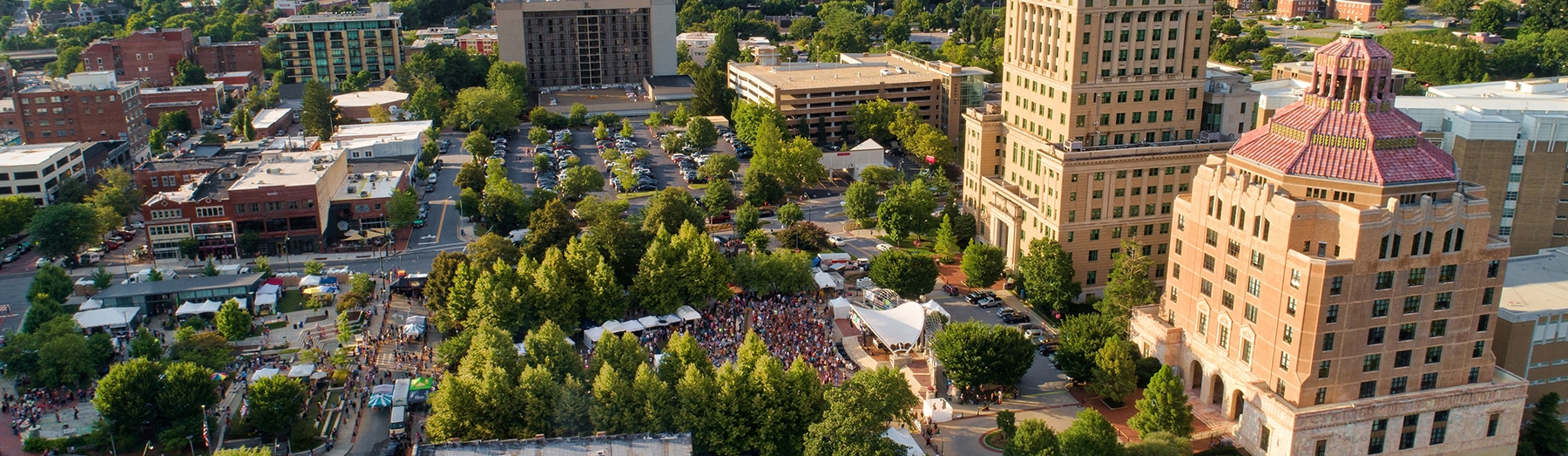
The Event Support Grant, administered by ArtsAVL, currently supports 15 free, public events across Asheville—from Downtown After 5 to the Goombay Festival and Shindig on the Green. With an average award of about $4,500 per event, the program helps offset costs associated with hosting events in public spaces.
The current proposal would eliminate the entire $76,014 Event Support Grant, while the City projects only $25,000 in actual cost savings. The structure of the program helps explain this gap: $68,700 is regranted directly to nonprofits and ultimately returned to the City through required fees. In effect, the majority of these funds circulate back into City revenue while enabling events to take place.
Without this support to offset City fees, many events become financially unviable—resulting in scaled-back programming or cancellations. The net effect is fewer events, reduced foot traffic, and diminished revenue for surrounding businesses, far outweighing the limited projected savings.
Holiday Events: Economic Drivers at Risk
The proposed $98,000 reduction in holiday event funding—including the potential cancellation of the City’s contract with the Asheville Downtown Association—would impact major civic celebrations such as the Holiday Parade and Independence Day festivities.
These events are more than cultural traditions; they are among the highest-grossing days for downtown businesses. The broader implications also extend to longstanding community events like MLK Day, Juneteenth, Veterans Day, and Memorial Day.
In total, cuts to both the Event Support Grant and holiday programming could affect at least 21 community events—many of which play a key role in driving tourism, supporting small businesses, and fostering community connection.
Public Art: Pausing Progress During Rebuild
A proposed $274,000 pause in public art funding would halt new investments and delay maintenance on existing works, adding to an already identified $250,000 backlog. More significantly, it would remove arts integration from capital improvement projects at a time when Asheville is actively rebuilding infrastructure.
Public art has long been a defining feature of Asheville’s identity, contributing to placemaking, tourism, and local creative employment. Pausing this investment risks missed opportunities to embed community identity into recovery efforts and to support local artists and fabricators.
A Broader Economic Concern
Data from 2023 underscores the scale of the creative economy in Buncombe County: 9,203 jobs, $488 million in labor income, $810 million in GDP, and $1.64 billion in total economic output. Arts and cultural programming are not peripheral—they are core mechanisms through which this economic activity is generated.
Events and public art increase foot traffic, extend visitor stays, and drive spending across hospitality, retail, and service sectors. The ripple effects are substantial: each job in the creative sector supports additional employment, and every dollar generated circulates through the local economy.
Shifting Costs, Slowing Recovery
Critics of the proposed cuts argue that rather than eliminating costs, the City is shifting financial burden onto local businesses and nonprofits—many of which are still recovering from Hurricane Helene. Without public investment, organizations may be forced to seek additional sponsorships, reduce programming, or cancel events altogether.
At the same time, Buncombe County is increasing its investment in public art and cultural activation as part of its recovery strategy, creating a potential misalignment between local government partners at a critical moment.
What Comes Next
City Council is currently holding a series of internal budget check-ins, with the final public work session scheduled for April 14. A draft budget will follow, with opportunities for public input in May before a final vote on June 9.
As discussions continue, the central question remains: are these proposals truly reducing costs—or reducing the very economic activity Asheville depends on to recover and thrive?
RELATED REPORTS
Creative Sector Survey Reveals Top Support Needs for Artists in Western North Carolina
2025 survey of 358 WNC creatives reveals top support needs—financial aid, marketing, space access—as artists recover and rebuild after Hurricane Helene.
Interactive Map of Arts and Culture Assets in Buncombe County Impacted by Hurricane Helene
Map of 573 arts and culture assets in Buncombe County impacted by Hurricane Helene. Updated quarterly to track recovery and resilience across the sector.
WNC Arts Relief: Hurricane Helene’s Impact on the Creative Economy and the Road to Recovery
Hurricane Helene devastated WNC’s arts sector. Learn how ArtsAVL is leading recovery with emergency grants, business aid, and creative workforce support.