
What North Carolina’s Economic Recovery Plan Says About the Arts
The new state plan positions arts and culture as part of WNC’s long-term economic recovery and identifies the creative economy as an opportunity for future growth.
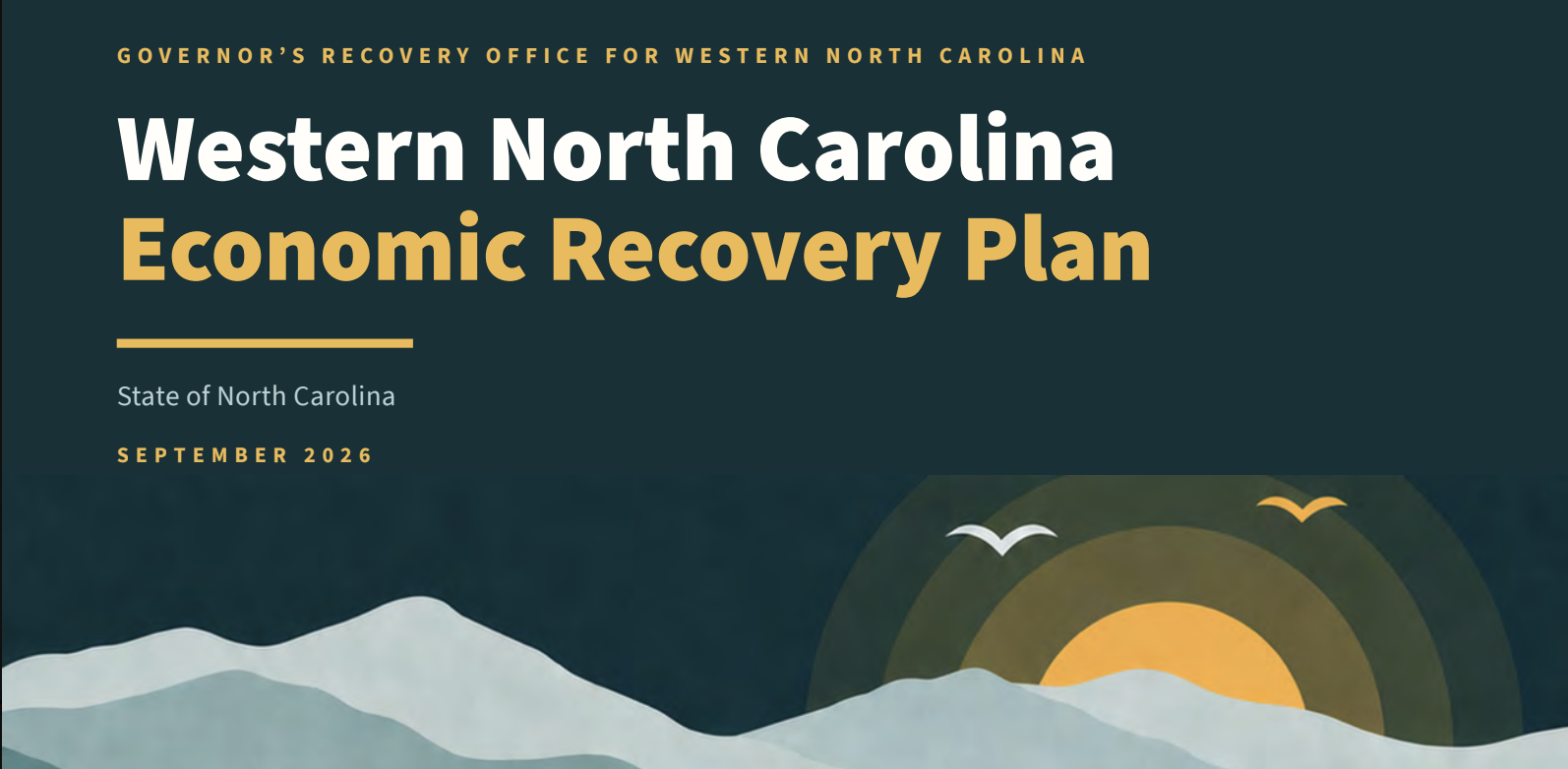
On September 23, Governor Josh Stein and the Governor’s Recovery Office for Western North Carolina (GROW NC) released the Western North Carolina Economic Recovery Plan, a long-term framework for rebuilding and growing the region’s economy following Hurricane Helene. The plan was developed with input from across the 28-county region and is intended to align regional priorities, partners, and resources.
For Western North Carolina’s arts community, there is a lot to pay attention to.
The plan recognizes arts and culture as part of the region’s economic recovery, identifies specific opportunities to strengthen the creative economy, and builds on work already underway in Asheville and Buncombe County.
Here are the biggest takeaways.
Arts and culture are part of the economic recovery strategy
Arts and culture are included among the major areas of work identified for Western North Carolina’s economic recovery.
The plan calls for strengthening the region’s creative economy and the infrastructure that supports it—from artists and creative businesses to cultural organizations, arts districts, music, craft, and other creative industries.
It also recognizes the scale of the sector. Per ArtsAVL’s Creative Economy Snapshot, Western North Carolina’s creative economy generated more than $3 billion in sales and supported nearly 35,000 jobs in 2025.
Across the plan and the Advisory Committee recommendations included in its appendix, the N.C. Department of Natural and Cultural Resources, North Carolina Arts Council, ArtsAVL, Craft Your Commerce at Mountain BizWorks, arts councils, regional craft centers, and other partners are identified as potential leaders and partners in this work.
The goal isn’t just recovery. It’s growth.
The plan looks beyond replacing what was damaged or lost during Hurricane Helene.
It calls for strengthening the systems that allow artists and creative businesses to succeed in Western North Carolina. That includes connecting creative businesses to markets and supply chains, supporting the region’s music and craft industries, engaging community colleges and Small Business Centers, and exploring new ways to market and sell Western North Carolina-made work.
Additional recommendations submitted through the Governor’s Advisory Committee planning process address another major challenge facing the creative sector: keeping artists and creative workers in the region. These recommendations propose affordable live/work space, apprenticeships and workforce development, and artist residency opportunities.
The state plan builds on our local Arts Recovery Framework
The plan specifically cites the Asheville-Buncombe Arts Recovery Framework, developed by ArtsAVL with Lord Cultural Resources and community partners.
The Framework was created to make sure arts and culture are connected to the larger decisions being made about our community’s recovery—including economic development, tourism, workforce, public space, infrastructure, and long-term planning.
The state plan says this approach is “a vision shared in this plan.” It goes on to describe growing and strengthening the creative economy as potentially “one of the highest-leverage, most authentic WNC catalysts available.”
That creates an opportunity to connect work already underway in Asheville and Buncombe County with a broader regional recovery effort.
“For the past two years, ArtsAVL has been sharing what we are learning about arts-led disaster recovery with communities and national partners,” said Katie Cornell, Executive Director of ArtsAVL. “What is exciting about this plan is the opportunity to build on that work—to strengthen our creative economy here at home while developing a recovery model that can help other communities facing disasters in the future.”
WNC could become a national model for arts-led disaster recovery
The plan includes recommendations developed through the Governor’s Advisory Committee planning process. Among the most ambitious is a proposal to “Establish WNC as a National Model for Arts-Led Disaster Recovery.”
The recommendation calls for Western North Carolina to document and share its recovery experience nationally, demonstrating how arts, culture, and tourism can contribute to disaster recovery. It proposes publishing and presenting a WNC case study at national arts and tourism policy forums by 2030 and ultimately having national foundations or federal programs cite the region as a model.
These are recommendations included as input to the planning process, rather than commitments or targets adopted in the core plan.
This work is already underway. Since the storm, ArtsAVL has presented Western North Carolina’s arts recovery work to national audiences and shared lessons with partners across the country, including at the National Endowment for the Arts’ National Council on the Arts meeting in May and the Americans for the Arts national conference in June.
What happens now?
The release of the plan does not mean that every strategy or recommendation is funded or guaranteed to happen.
The plan itself is clear that it is not a budget or a list of promises. Some work is already underway, while other ideas will require new public, private, or philanthropic investment. GROW NC is responsible for identifying the specific actions and measures needed to implement the plan, with actions, targets, and timelines expected to be refined as implementation begins.
What has changed is that arts and culture now have a defined place within the larger economic recovery framework for Western North Carolina.
That gives our region something concrete to build from.
For ArtsAVL, the work ahead is to continue working with artists, arts organizations, creative businesses, local governments, the North Carolina Arts Council, state agencies, regional partners, and national partners to turn the ideas in the plan into action.
ArtsAVL’s new issue brief takes a deeper look at the arts and culture components of the Economic Recovery Plan—what the core plan proposes, what additional recommendations emerged through the planning process, who may be responsible for moving the work forward, and how our arts community can participate.
The opportunity ahead is not simply to rebuild the creative sector we had before Helene. It is to build a stronger and more resilient creative economy—and to show what arts-led disaster recovery can look like for communities across the country.